
November 21, 2025
It comes in response to the growing national demand for skilled professionals in Israel’s defense technology sector.
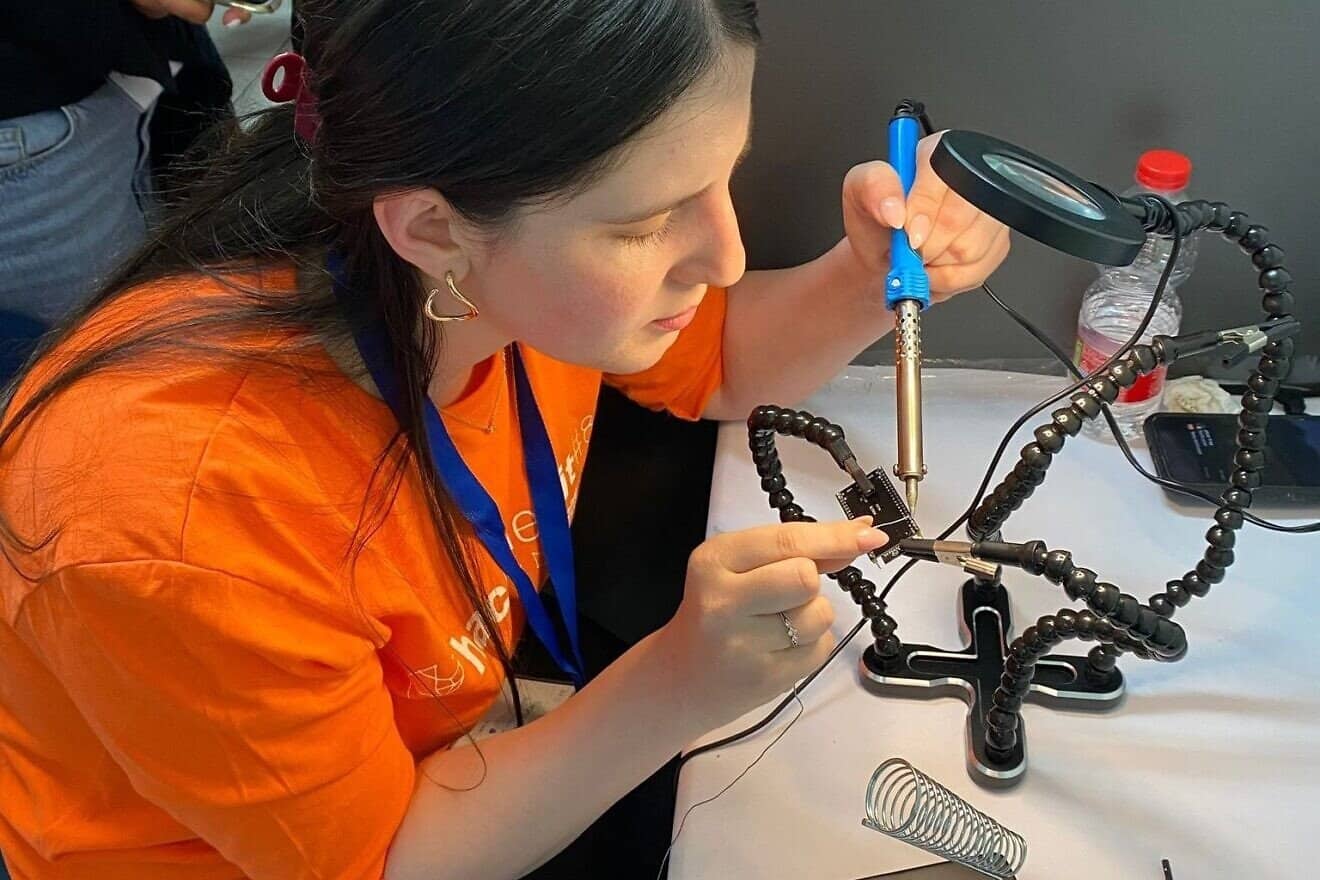
(Nov. 21, 2025 / Jerusalem College of Technology)
In response to the growing national demand for skilled professionals in Israel’s defense technology sector, the Jerusalem College of Technology has revamped its electro-optics engineering bachelor’s degree program at the Tal Campus for Women, positioning religious women to enter one of the most crucial industries for Israel’s survival and prosperity.
Over the past year, interest in electro-optics—a field at the intersection of applied physics and engineering that underpins Israel’s missile defense, imaging and laser systems—has surged dramatically as a result of the war.
In response, JCT’s Tal Campus has enrolled a full cohort of women pursuing this specialization, many of them Haredi, inspired by a sense of purpose and national contribution in the wake of the two-year war with Hamas. Almost half (45%) of electro-optics students at JCT are women, underscoring the college’s role in driving greater women’s integration into STEM (science, technology, engineering and math) careers.
“Religious women, and women in general, typically come to us without a background in physics, but with exceptional analytical abilities and a deep motivation to understand how the world works,” said professor Talia Yeshua, head of the Electro-Optics Department at JCT’s Tal Campus. “We’ve designed a curriculum that introduces them to physics in a way that feels accessible, empowering and relevant while also providing a clear, practical pathway into the workforce.”
The revamped four-year program is built around two complementary tracks: applied physics and electro-optical engineering. Students can choose to pursue advanced research or enter the high-demand engineering workforce immediately after completing their first degree.
Unlike traditional physics degrees, which often require graduate studies for professional placement, JCT’s model integrates hands-on engineering training throughout the program—opening doors to employment in Israel’s defense industry, as well as in high-tech, health technology, imaging and aerospace sectors.
“There’s no other place in Israel that offers a full-fledged bachelor’s degree combining both engineering and electro-optics under one roof,” Yeshua explained. “Our graduates can immediately find meaningful, well-paying jobs—many of them in companies developing the very systems that protect our country.”
For Yael Beker, a first-year electro-optics student at JCT, the motivation to join the program was deeply personal.
“Since the war began, I knew I wanted to study something in math and science that changes the world,” Beker said. “When I heard about electro-optics and how it contributes to defense innovation, it sounded like the perfect fit. The first month was intense, but I love the challenge. I knew what I signed up for, and I’m proud of it.”
Beker, who comes from a religious background, said the program has inspired many women in her community to see new possibilities for themselves.
“A lot of people asked me how I could do this as a religious woman, but I think it’s great that more women are showing interest,” she said. “When I finish my degree, I want to work for the best of the best. My friends and I hope to set an example—that gender or religious background shouldn’t hold anyone back from pursuing what they love.”
JCT’s alumni have already made an impact on Israel’s defense innovations, including major technological breakthroughs such as the Iron Dome, David’s Sling and Arrow missile systems. The college’s renewed emphasis on electro-optics aims to ensure that women are part of Israel’s next generation of scientific leadership in these vital fields and fits perfectly with JCT’s prioritization of women’s empowerment.
“The program not only prepares women for professional success; it gives them the sense that their work truly matters,” Yeshua added. “That’s something our students deeply value. They see this as a way to contribute to Israel’s security and to the world.”
With 21 students currently enrolled, including several pursuing double degrees, the program reflects a larger cultural shift among religious women who once viewed engineering and physics as out of reach. Now, in the right academic environment and community support, they are stepping confidently into roles once dominated by men.
“Women bring creativity, collaboration, and a fresh perspective to the table,” Yeshua said. “The more women involved in physics and electro-optics, the stronger our teams—and our country—will be.”